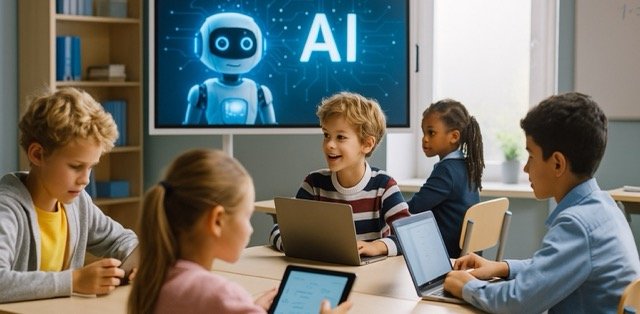
Children growing up in 2025 are experiencing an education revolution powered by artificial intelligence and gamified learning. The classroom of today looks nothing like the one from a decade ago — digital whiteboards, holographic teachers, and personalized AI tutors are now standard in major cities.
Kids no longer memorize facts; they explore simulations. AI tools design custom learning paths based on each child’s interests and pace. A 7-year-old fascinated by dinosaurs might get lessons that mix paleontology with math and art. This personalized approach is helping children learn faster while staying genuinely curious.
Parents, once skeptical of screen time, are now embracing interactive learning. Many schools use AR glasses that project 3D lessons right into the child’s surroundings — from solar systems orbiting around desks to virtual frog dissections without harming real animals.
Technology has also made education more inclusive. AI translators allow children from non-English-speaking backgrounds to learn in real time. Kids with disabilities benefit from sensory-friendly devices and speech recognition systems that help them communicate more confidently.
Still, the tech-powered childhood isn’t without risks. Experts warn that excessive virtual exposure could hinder social skills and emotional development. As a result, many schools are introducing “digital balance programs,” teaching children mindfulness, empathy, and creativity alongside coding and math.
The ultimate goal of education in 2025 is not just smarter kids — it’s balanced, emotionally intelligent humans. In the right hands, technology is becoming a bridge, not a barrier, to a brighter generation.